

How many solar panels do I need for my home?
The right number of solar panels depends on your home, energy use and future plans — not just roof space.
✓ Takes around 2 minutes
✓ Personalised Home Energy Report included
✓ No sales pressure
Prefer to speak directly? 0333 112 7272
What affects how many solar panels you may need
Working out how many solar panels your home may need isn’t simply about roof space.
The right system depends on how your home uses electricity today — and how that may change over time.
Most people start with panels. The better starting point is your home.
A system designed around your home and lifestyle often matters more than simply adding more panels.
- How much electricity your household uses each year
- Roof size, layout and usable roof space
- Whether your roof faces south, east or west
- Shading from trees, chimneys or nearby buildings
- Future plans such as EV charging or heat pumps
- Whether battery storage may be part of the system
How many panels do most homes need?
Most UK homes don’t need every inch of roof space covered.
A typical system might range from:
- 2–3 bedroom home: often around 8–12 panels
- 4–5 bedroom home: often around 12–18 panels
- Homes with EV charging or heat pumps: potentially more
The right number depends on your roof layout, how electricity is used today and how that may change over time.
The goal isn’t fitting the most panels possible.
It’s designing the right system for the home.
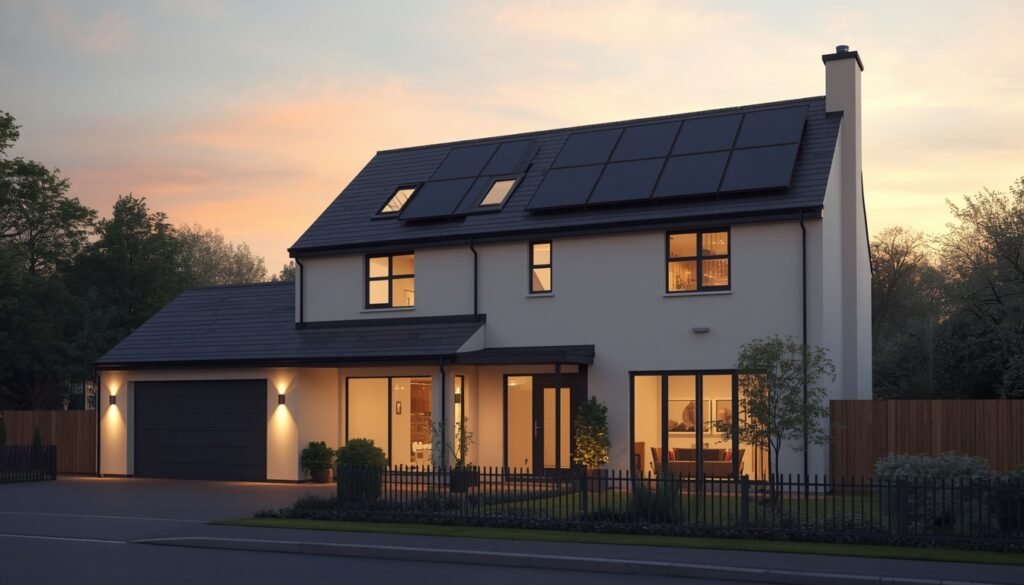
Designed for homes across Surrey
We work with homeowners across Surrey — from Guildford and Woking to Reigate, Redhill and Dorking — designing systems that reflect how homes here are actually used.
Every system is shaped by the property itself — from roof orientation and shading to how energy is used day to day — not built from a template.
How many solar panels does my home need?
There isn’t a single answer because every home uses energy differently.
Two homes with identical roofs can require completely different systems depending on their energy use, household size and future plans.
At Glow, we look at the whole picture before recommending a system.
Your home
- Roof size and usable space
- Roof direction and shading
- Property type and layout
Your energy use
- Household electricity consumption
- Number of occupants
- Daytime vs evening energy use
Your future plans
- Electric vehicle charging
- Heat pump upgrades
- Growing family or home working
Every system is designed around your home — these factors simply help shape the starting point.
What could that mean for your home?
Finding the right number of solar panels isn’t simply about fitting as many panels onto your roof as possible.
The goal is to create a system that works around how your home uses energy today — and how it may change in the future.
- A smaller home with low electricity use may only need a modest system
- A growing family or increased time working from home can increase energy demand
- EV charging can significantly increase electricity demand
- Heat pumps can change how energy is used throughout the home
- Battery storage can affect how energy is captured and used
That’s why two homes on the same street can end up with very different energy systems — even if they look almost identical.
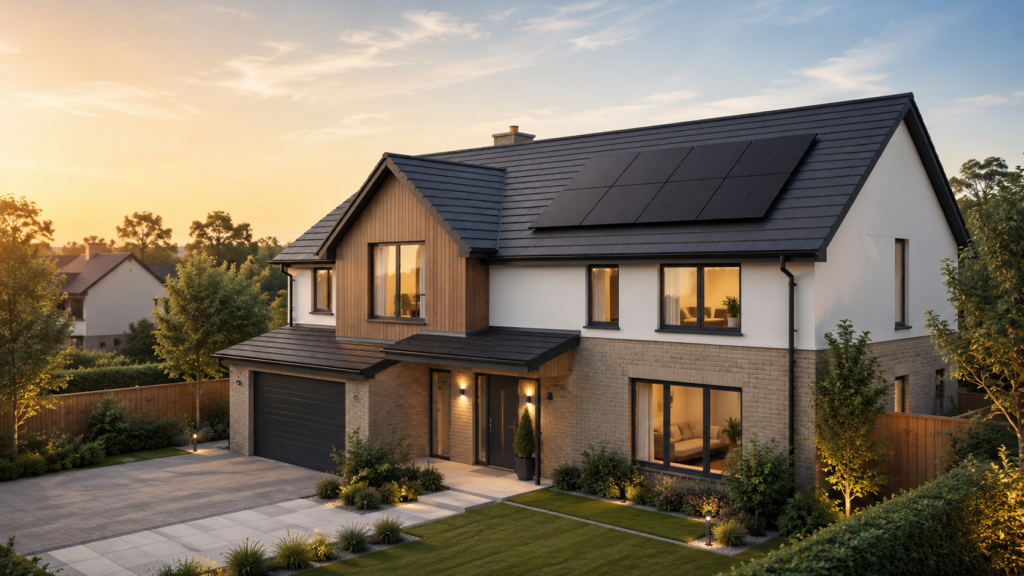
What happens next
We keep the process straightforward — focused on your home, not a standard package.
1. Initial conversation
A short conversation to understand your home, how you use energy today, and anything that may change in the future.
2. Home assessment
We look at the property itself — roof layout, energy use, future plans and how the home actually works day to day.
3. System design
We design a system around your home — considering generation, storage and how energy is used throughout the day.
4. Installation & handover
Installation is delivered by experienced MCS-certified installers, with Glow overseeing the process from start to finish.
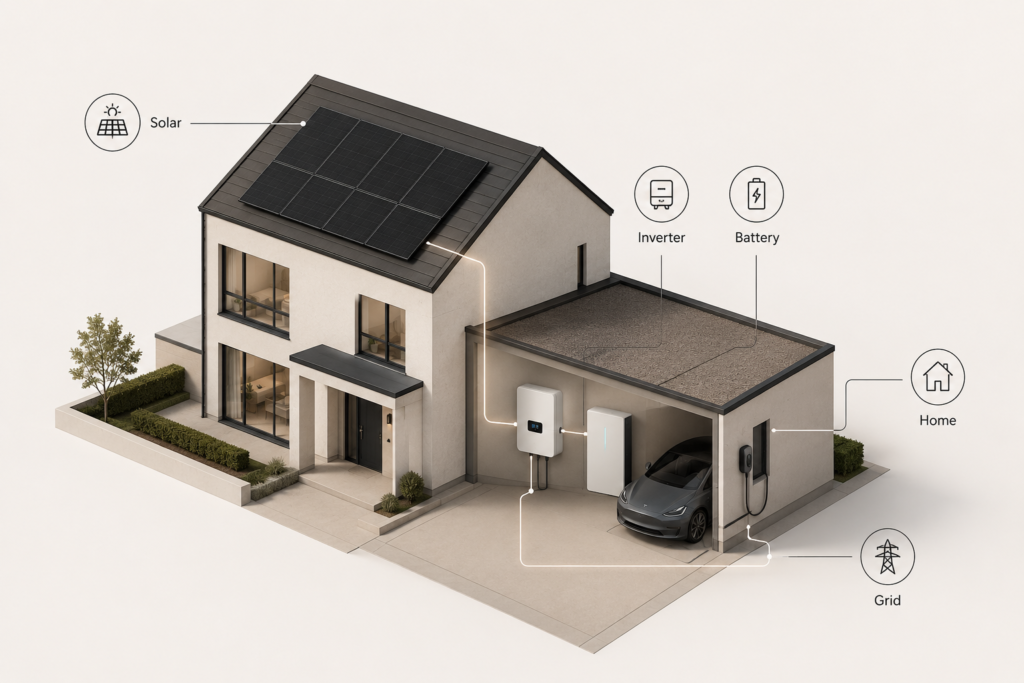
No pressure. No standard packages. Just complete home energy systems. Designed around your home.
Start with your home
Every system we design begins with understanding how your home actually uses energy.
Whether you’re considering solar today, planning for battery storage, or thinking ahead to EV charging and future changes, we help you understand what makes sense for your home.
No pressure. No standard packages. Just a conversation.
Prefer to speak directly? 0333 112 7272
Questions about solar panels and your home
How many solar panels does my home need?
There isn’t one standard answer.
Two homes with similar roof sizes can require very different systems depending on electricity use, occupancy, roof layout and future plans.
Things such as EV charging, battery storage, working from home or heat pump upgrades can all affect the right system size.
That’s why we start with the home first — not simply the roof.
Is my home suitable for solar panels?
Many homes are, but suitability depends on more than roof size.
Roof direction, shading from trees or chimneys, usable roof space and how electricity is used throughout the day can all make a difference.
Even homes that aren’t south-facing can still perform very well when systems are designed properly.
How much does solar panel installation cost?
System cost varies depending on generation capacity, battery storage and the wider energy setup.
The better question is often whether the system has been designed around how your home actually uses energy.
A well-designed system frequently performs better long-term than simply installing more panels.
Do I need planning permission for solar panels?
Most residential solar panel installations fall under permitted development and do not require planning permission.
There are some exceptions, including listed buildings, conservation areas and certain protected locations.
We can usually identify this early in the process and help guide you through it.
Are solar panels still worth installing in the UK?
For many homeowners, yes.
Homes are changing. EV charging, home working and wider electrification are increasing how households use electricity.
The question increasingly isn’t simply how many panels fit on a roof — it’s how your home may use energy over the next 10–20 years.
Should I install battery storage with solar panels?
Battery storage allows more of the energy generated during the day to be stored and used later.
For many homes, storage increasingly plays an important role because it helps manage when electricity is used — especially if future plans include EV charging, home working or heat pumps.
At Glow, we often design around the complete home energy system rather than treating batteries as an afterthought.