

The shift most homeowners haven’t fully noticed yet
For decades, energy has been something you simply used.
It arrived through the grid.
It was billed monthly.
And beyond switching suppliers, there wasn’t much to think about.
That model worked — when homes didn’t rely on energy the way they do today.
But quietly, that has changed.
Homes are becoming more energy-dependent than ever
Modern homes are no longer passive.
They are becoming active, electrically driven environments:
- Electric vehicles charging overnight
- Heat pumps replacing gas boilers
- Home offices running all day
- Smart systems managing lighting, heating, and security
Energy is no longer a background service.
It’s becoming a core part of how a home functions.
And with that shift, something important happens:
“Energy used to be something your home consumed.
Now it’s something your home needs to manage.”
— Jon Skinner
The grid wasn’t designed for this level of demand
The UK grid is evolving, but it wasn’t originally built for:
- High-density EV charging
- Electrified heating at scale
- Homes generating and exporting power
In many areas, export is already limited.
In others, infrastructure upgrades are lagging behind demand.
This doesn’t mean the grid is failing.
But it does mean:
Relying on it entirely is no longer the most resilient approach.
The old model: energy as a utility
The traditional setup looks like this:
- Energy flows in from the grid
- You consume it as needed
- You receive a bill
Simple. Familiar. Reactive.
But it has limitations:
- No control over when you use energy
- No protection from price volatility
- No ability to store or manage what your home generates
It treats energy as something external to your home.
The new model: energy as infrastructure
Now compare that with a modern, well-designed system.
Energy becomes something your home actively manages:
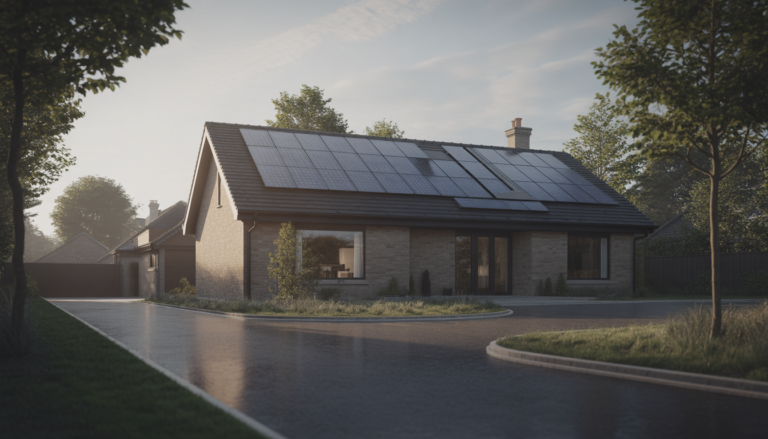
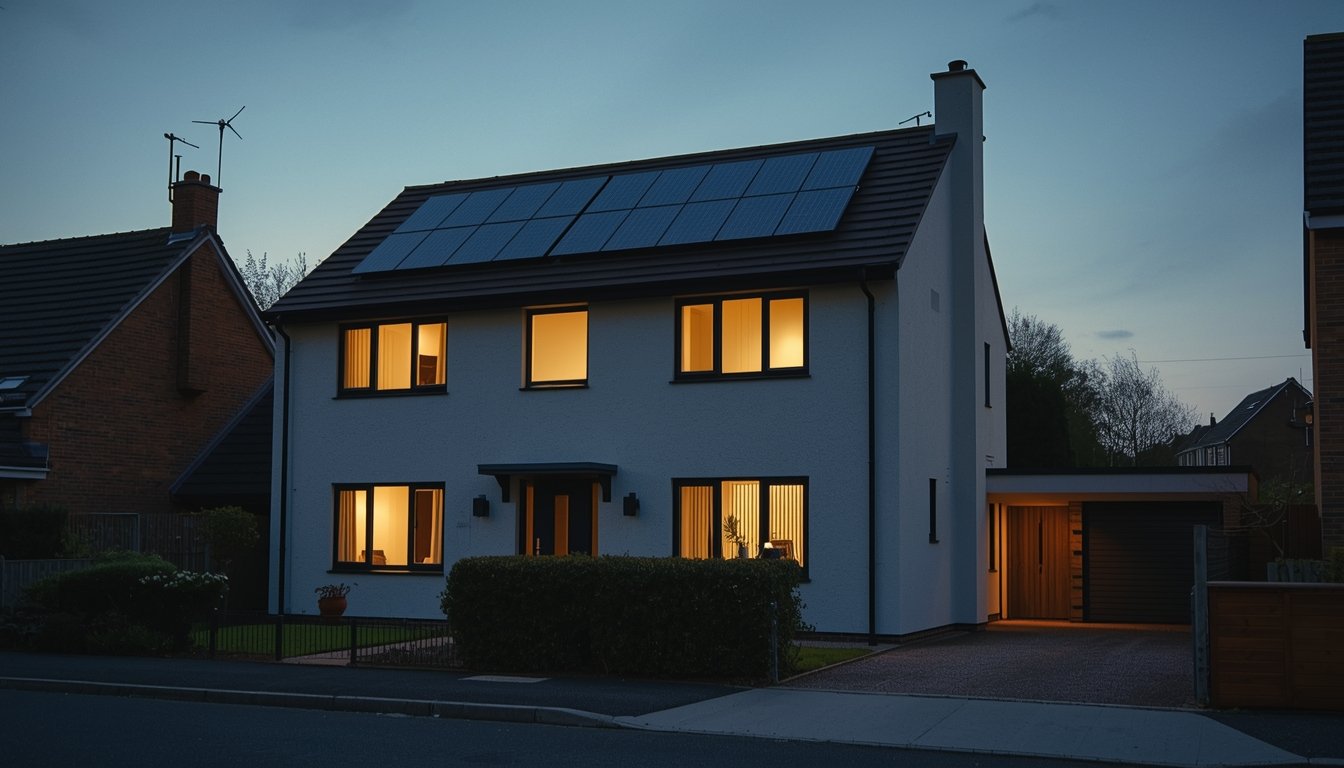
- Solar generates power during the day
- Battery storage holds energy for later use
- Intelligent control decides when to use, store, or export
Instead of reacting to the grid, your home starts to operate more independently.
And this shift is already happening.
In parts of the UK, battery storage is now included in the vast majority of new solar installations — quietly becoming the default rather than the upgrade.
This is the key change:
Energy moves from something you buy…
to something your home is designed to manage.
Why this changes how systems should be designed
If energy is infrastructure, the approach to installing it has to change.
It’s no longer about adding components.
It’s about designing a system that works as a whole.
That means considering:
- How the household uses energy today
- How that usage will change over time
- How storage, generation, and control interact
This is why simply “adding solar” often falls short.
Without storage or proper system design:
- Excess energy is exported instead of used
- Evening demand is still pulled from the grid
- The system can’t adapt as the home evolves
A system designed properly behaves differently.
It feels quieter. More stable. More predictable.
Ownership changes the mindset
Once energy becomes part of your home, something else shifts.
You stop thinking in terms of:
- Tariffs
- Switching suppliers
- Short-term savings
And start thinking in terms of:
- Control
- Reliability
- Long-term performance
It becomes closer to how you think about:
- Your heating system
- Your roof
- Your structure
Not something temporary — something that should just work.
What this means for homeowners today
Most homeowners are somewhere in the middle of this transition.
They’re aware of solar.
They’ve heard about batteries.
They know energy costs have changed.
But the underlying shift — from utility to infrastructure — isn’t always clear.
And that’s where many decisions go wrong.
Systems are installed based on:
- Panel count
- Price
- Short-term output
Instead of long-term performance and integration.
A calmer way to approach it
If you’re exploring solar or battery storage, it helps to step back and reframe the question.
Instead of:
“How many panels should I install?”
A better starting point is:
“How should my home manage energy over the next 10–20 years?”
From there, everything else becomes clearer:
- Whether storage is needed
- How much capacity makes sense
- What the system should be designed to handle
No pressure. No urgency. Just clarity.
The bigger picture
Energy isn’t becoming more complicated.
It’s becoming more important.
And as homes continue to electrify, the role of energy will only grow.
The homes that perform best won’t be the ones with the most panels.
They’ll be the ones where the system has been designed properly from the start.
Final thought
You already think of your home as something long-term.
Energy now belongs in that same category.
Not as a monthly bill —
But as part of the structure that supports how your home works, every day.