

The old habit: waiting for 7 pm
For years, energy behaviour in UK homes has followed a simple, learned rule:
Wait until it’s cheaper.
Washing machines go on after 7 pm. Dishwashers are delayed. Showers are timed.
Not because it’s convenient — but because it feels financially safer.
This isn’t random. It’s the result of decades of:
- Economy 7 tariffs
- Peak vs off-peak pricing
- Smart meter visibility
- Rising energy costs
Over time, this has shaped something deeper than decision-making.
It’s shaped habitual restraint.
Energy became something to manage, limit, and delay.
The psychology of “energy anxiety”
Most homeowners don’t consciously think about tariffs all day.
But behaviour tells a different story.
Small, everyday decisions are quietly influenced by:
- “Is now an expensive time to use energy?”
- “Should I wait until later?”
- “Will this push the bill up?”
This creates what we’d call low-level energy anxiety.
Not panic. Not stress.
Just a constant, background awareness that energy use has a cost penalty.
So behaviour adapts.
Solar flips the model completely
Solar doesn’t just reduce bills.
It changes the relationship people have with energy.
Because for the first time, energy becomes:
- Available in real time
- Visible during the day
- Self-generated
- Partially decoupled from pricing structures
And that changes behaviour almost immediately.
A subtle but powerful shift
With solar (and especially with battery storage), something interesting happens:
People stop asking:
“When is the cheapest time to use energy?”
And start asking:
“When does it make sense to use the energy I already have?”
That’s a completely different mindset.
The rise of daytime energy use
There’s another factor accelerating this shift:
How we work has changed.
Since COVID, the UK has seen a structural move toward:
- Hybrid working
- Remote-first roles
- Flexible hours
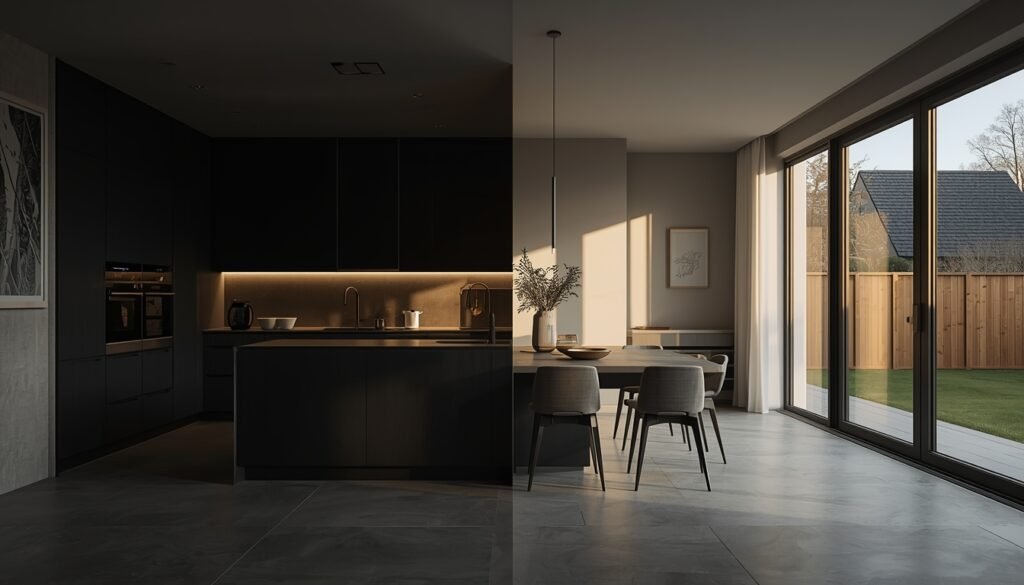
More people are at home during the day than ever before.
And that aligns perfectly with solar generation.
Instead of:
- Empty homes generating unused energy
We now have:
- Occupied homes using energy as it’s produced
That means:
- Washing during the day
- Charging devices mid-afternoon
- Running appliances without thinking about tariffs
Energy use becomes naturally aligned with availability, not pricing.
From restriction to freedom
This is where the real behavioural shift happens.
Traditional energy systems train people to:
- Delay usage
- Optimise around pricing
- Reduce consumption where possible
Solar-based systems enable people to:
- Use energy when it’s convenient
- Align usage with generation
- Feel comfortable consuming what they produce
It’s not about using more energy.
It’s about removing the friction around using it.
The role of battery storage
Solar, on its own, changes behaviour.
But solar + battery changes it even further.
Because now:
- Daytime generation can be stored
- Evening usage is still self-powered
- Peak tariffs become less relevant
This extends that same feeling of control into:
- Evenings
- Early mornings
- Higher-demand periods
It creates something most homes have never had before:
Continuity of energy independence.
A system, not a product
This is why solar should never be viewed as just panels on a roof.
A well-designed system considers how a home actually uses energy — not just how it generates it.
Because behaviour matters.
And when everything is designed properly, the system:
- anticipates usage patterns
- supports real-life routines
- removes unnecessary constraints
A new way of thinking about energy
If we were to summarise the shift, it’s this:
Old model:
- Energy is something you buy
- Usage is something you manage
- Cost dictates behaviour
New model:
- Energy is something you produce
- Usage is something you align
- Availability guides behaviour
“The biggest shift in home energy isn’t how much you save — it’s how you start thinking about using it.”
— Jon Skinner, Glow Homes
The bottom line
Solar doesn’t just reduce bills.
It removes hesitation.
It replaces:
- timing with flexibility
- anxiety with confidence
- restriction with control
And once that shift happens,
you don’t go back to waiting until 7 pm.
Curious what this looks like in your home?
Start by understanding how your home actually uses energy, not just how much.
That’s where the real shift begins.