

Most homeowners start with panels. The reality? That’s the wrong place to begin.
The common assumption
When people think about solar, they almost always start with one question:
“How many panels do I need?”
It sounds logical. Panels are the visible part. The part you can count. The part most companies sell.
But here’s the reality:
Solar panels don’t manage energy. They only generate it.
And generation, on its own, doesn’t solve the problem.
What actually matters
A home energy system isn’t defined by how much it can generate.
It’s defined by how well it can control, store, and use energy over time.
That means three things matter far more than panels:
- Battery storage — where energy is held, when it’s used, and how much flexibility you have
- Inverter — the system brain that decides where energy flows in real time
- System design — how everything is configured to match the way your home actually uses energy
Panels are just one input into that system.
Important, yes.
But not the thing that determines performance.
Why most systems are built the wrong way around
A lot of solar installations still follow the same pattern:
- Start with roof space
- Maximise panel count
- Add a small battery (if any)
- Work the rest out later
This creates a system that looks good on paper — but behaves poorly in real life.
You end up:
- exporting energy when you don’t need to
- importing energy when you do
- relying on the grid more than expected
- missing the real benefits of having control
In short, it’s generation-first thinking.
And it’s backwards.
What a properly designed system looks like
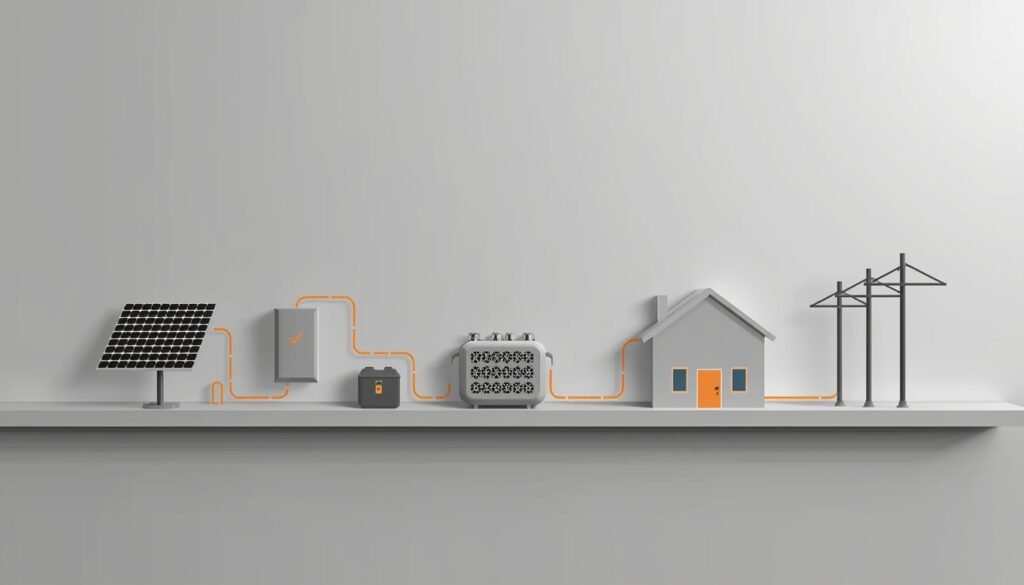
At Glow, systems are designed from the inside out.
Not from the roof down.
That means starting with:
- how the home uses energy throughout the day
- how that will change over time (EVs, heating, lifestyle shifts)
- where control and flexibility are needed
- how much storage is required to support that
Only then do panels come into the picture.
Because their role is simple:
to feed a system that already works properly.
The role of storage (and why it changes everything)
Without storage, solar is reactive.
With storage, it becomes controllable.
That’s the difference between:
- generating energy
vs - actually using it intelligently
It’s also why Glow systems are never designed without battery storage.
Because without it, you’re only solving half the problem.
Design is where the real value sits
The biggest difference between systems isn’t the hardware.
It’s the thinking behind them.
Two homes could have:
- the same number of panels
- the same inverter size
- the same battery capacity
…and perform completely differently.
Why?
Because of design.
- how energy is prioritised
- how loads are balanced
- how storage is utilised
- how future demand is accounted for
That’s where long-term performance comes from.
Not from panel count.
A different way to think about solar
If you’re looking at solar for your home, it helps to shift the question.
Instead of asking:
“How many panels do I need?”
Ask:
“How should my home actually use energy?”
Because once that’s clear, everything else follows.
A note from Glow
“Most people start by looking at panels because that’s what they can see.
But panels don’t make a system intelligent — design does.If you get the system right, the panels take care of themselves.
If you get it wrong, no number of panels will fix it.”— Jon Skinner, Founder, Glow Homes
Final thought
Solar is often sold as a product.
At Glow, it’s treated as part of a much bigger system.
One that’s designed to sit quietly in the background
and work properly for decades.