

Introduction
Most of the forces that shape the cost of living don’t start in the home.
They start elsewhere — in shipping lanes, energy markets, financial systems and geopolitical decisions that feel a long way removed from everyday life.
But they don’t stay there.
They move quietly, often invisibly, until they arrive in very familiar places:
fuel prices, energy bills, mortgage rates and monthly outgoings.
Recent events involving Iran are a clear example of how quickly that chain reaction can unfold.
The Part You Don’t See
One of the most important pieces of global energy infrastructure is the Strait of Hormuz.
A significant share of the world’s oil passes through it every day.
When tensions rise in that region, it doesn’t just affect supply locally — it affects global pricing everywhere.
Recent disruption has already led to sharp movements in oil markets, with prices rising significantly in a matter of weeks.
As analysts have pointed out across major outlets like Reuters, markets react not just to what has happened, but to what might happen next.
And that uncertainty is what drives pricing.
How It Reaches the UK
The UK doesn’t need to import energy directly from one specific route for this to matter.
Global markets set the price.
So when oil and gas become more expensive or more volatile, the effects show up quickly at home.
- Petrol and diesel prices begin to rise
- Wholesale energy costs increase
- Suppliers adjust pricing expectations
- Future energy caps become less certain
Even when short-term prices fall, the underlying volatility remains.
The energy regulator Ofgem has already highlighted how price caps can shift quarter to quarter — offering temporary relief, but not long-term certainty.
It Doesn’t Stop at Energy
This is where things become less obvious.
Energy shocks don’t stay contained.
They spread.
Higher fuel costs increase the cost of transporting goods.
Manufacturing becomes more expensive.
Businesses adjust pricing.
Inflation expectations shift.
And then something more subtle happens.
Financial markets react.
Lenders begin to reassess risk.
Mortgage products get repriced or withdrawn, and borrowing costs move.
As reported widely across financial coverage, mortgage markets have already seen significant product withdrawals and rate increases in response to recent volatility.
The connection might not feel obvious.
But it’s the same chain reaction.
The Role of Uncertainty

One of the biggest drivers of rising costs isn’t just supply — it’s uncertainty.
Markets price risk.
And when the future becomes less predictable, that risk gets built into everything:
- Energy pricing
- Lending rates
- Investment decisions
- Business costs
Economists have increasingly pointed to geopolitical tension as a key factor keeping inflation pressures alive — even when underlying conditions might otherwise stabilise.
What Support Looks Like (And What It Doesn’t)
There are measures in place to help households.
The government has extended schemes like the Warm Home Discount, and lenders are offering more flexibility under the Mortgage Charter, including options such as temporary interest-only payments or switching deals earlier.
But these are designed to ease pressure — not remove it.
They are targeted, limited, and reactive.
They don’t change the underlying reality:
Household costs remain exposed to global forces.
A Different Way to Think About It
You can’t control geopolitical events.
You can’t influence global energy markets.
But you can reduce how much your home depends on them.
That’s the key shift.
Not avoidance.
Reduction of exposure.
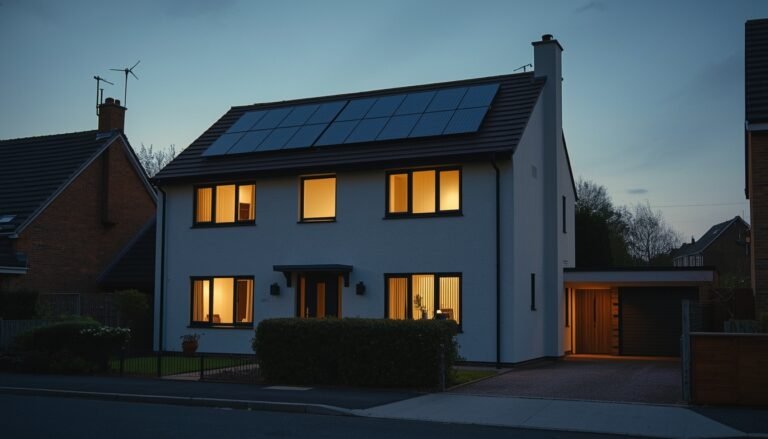
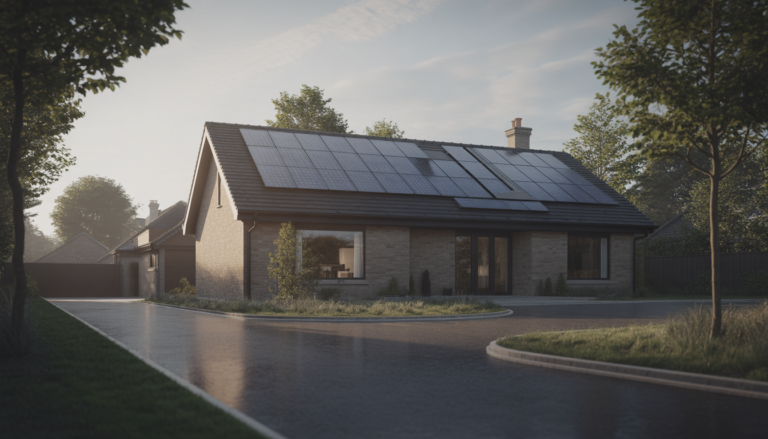
Why Home Energy Infrastructure Matters
When a home relies entirely on an external energy supply, it inherits all of the volatility that comes with it.
When a home generates and stores some of its own energy, that relationship changes.
Not completely.
But meaningfully.
A well-designed system can:
- Reduce reliance on grid electricity
- Increase the use of self-generated energy
- Store energy for use when prices are higher
- Provide more predictable long-term energy costs
As Paul Casey, COO at Glow Homes, puts it:
“Most people don’t realise how exposed their home is to global energy markets until something shifts.
The real opportunity isn’t trying to predict those shifts — it’s designing a home that depends on them less over time.
Long-term energy ownership isn’t about reacting to price rises. It’s about quietly stepping outside of them.”
The Importance of Design
Not all systems are equal.
Design matters more than components.
A system built purely around panels will behave very differently from one designed around storage, usage patterns and future demand.
Homes are becoming more electric.
Energy use is rising, not falling.
So systems need to be designed with that in mind — not just for today, but for the next 10, 20 or 30 years.
A Calmer Way Forward
There will always be events beyond our control.
Markets will move.
Prices will fluctuate.
Uncertainty will come and go.
That’s not new.
What is changing is how much control households can have over their own infrastructure.
The question is no longer whether global events will affect the cost of living.
They will.
The real question is:
How exposed do you want your home to be when they do?