

How Home Energy Actually Works
A home with solar panels and a battery is not a collection of separate products. It is a single, integrated energy system where generation, storage, consumption, and grid connection work together continuously.
Understanding this system as a whole matters more than understanding any individual component — because every part affects every other part, every moment of every day.
This article explains how residential energy systems function. The information applies to homes in the South of England and across the UK.
“Homeowners aren’t buying technology. They’re installing infrastructure that will be part of their home for decades. Understanding how that infrastructure works shouldn’t require a sales conversation.”
Jon Skinner, Founder
Electricity flows in one direction at a time
Electricity is not stored in wires. It flows.
At any given moment, the electricity powering a kettle or a heat pump comes from somewhere specific: the solar panels, the battery, or the grid. The system continuously decides which source to use based on what is available and what is needed.
Solar panels and batteries produce Direct Current (DC), where electricity flows in one continuous direction. The grid and household appliances use Alternating Current (AC), where the flow reverses direction 50 times per second. Conversion between DC and AC requires equipment and involves small energy losses — a detail that becomes important when systems are poorly designed.
A typical UK home consumes between 8 and 10 kWh per day, but this usage is uneven. Most households use relatively little electricity in the middle of the day, with demand rising sharply in the early morning and again between 5 pm and 9 pm. This mismatch between generation and demand sits at the heart of why system design matters.
This principle underpins our entire approach → How Glow Works
Solar panels generate electricity from daylight
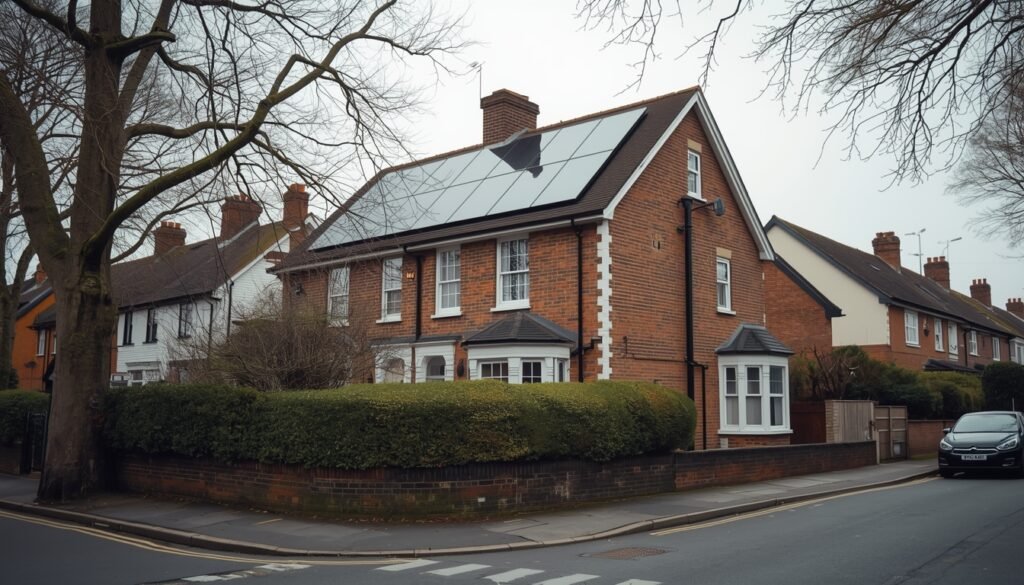
Photovoltaic cells convert light into electricity. When photons strike the silicon layers in a solar cell, electrons are released and flow as direct current. Panels generate power from daylight, not just direct sunshine, which is why they still produce electricity on overcast days.
A typical residential system in the South of England consists of 10–14 panels, totalling 4–5 kWp. Real-world output depends on orientation, pitch, shading, and weather — not brochure ratings.
South-facing roofs at around 35 degrees produce the highest annual output. East- and west-facing installations typically generate around 80% of south-facing output, but with different timing profiles. East-facing panels bias generation toward mornings; west-facing panels bias it toward afternoons.
A 4 kWp system typically generates 3,600–4,200 kWh per year, broadly matching average household consumption. The issue is timing. Generation peaks between 10 am and 3 pm. Consumption peaks between 5 pm and 9 pm. Without storage, households may only use 20–30% of what they generate.
Seasonality compounds this. Summer days may produce 18–22 kWh, while winter days may produce 4–6 kWh. A system exporting power all summer may rely heavily on the grid in winter.
This is why panels alone rarely deliver the outcomes homeowners expect.
The inverter manages the entire system
The inverter is the system’s control centre.
Its core role is converting DC electricity from panels into AC electricity for household use. In hybrid systems, it also manages battery charging and discharging, grid interaction, and energy prioritisation in real time.
The logic is simple:
When solar generation exceeds demand:
- Household loads are supplied first
- Excess charges the battery
- Remaining surplus exports to the grid
When demand exceeds generation:
- The battery discharges
- The grid supplies any remaining shortfall
These decisions happen automatically, recalculated continuously as conditions change.
Modern inverters operate at 95–98% efficiency, with performance peaking when they operate between 30–80% of rated capacity. Oversized inverters running lightly loaded are inherently less efficient — a subtle but important design consideration.
This is why inverter sizing is part of system design, not a spec-sheet decision → Our Systems
Battery storage bridges the timing gap
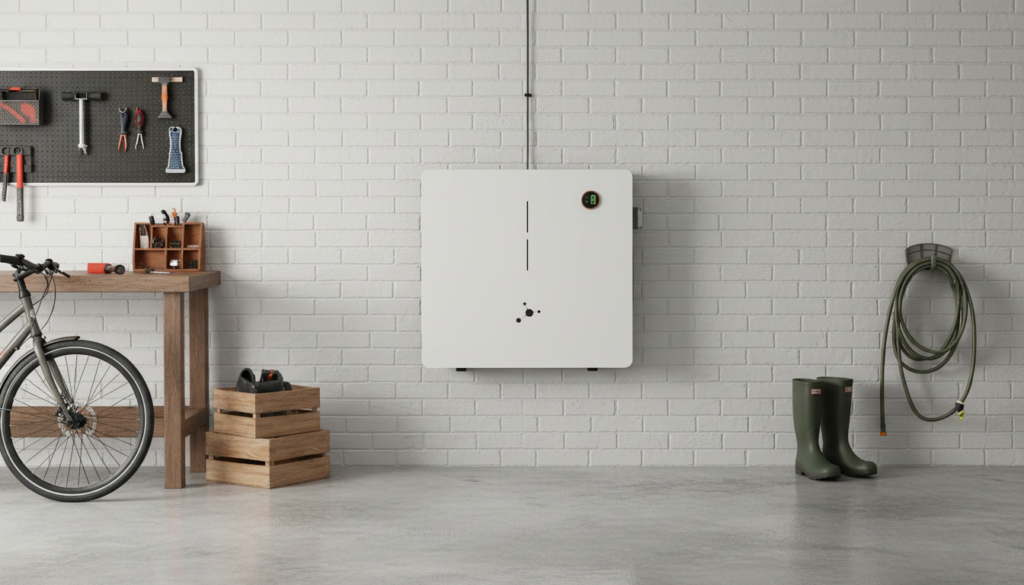
Without storage, solar electricity must be used instantly or exported. A battery allows energy generated during the day to power the home in the evening.
This is no longer niche. In 2024 alone, over 22,000 home battery systems were installed in the UK. Around 85% of new battery installs are paired with solar.
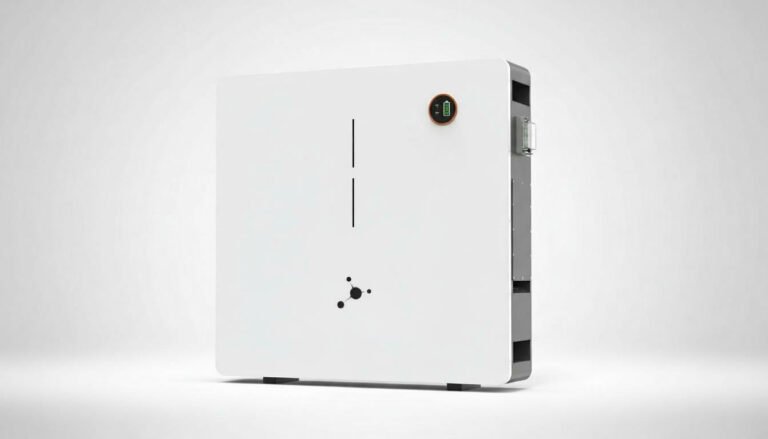
Most residential batteries use lithium iron phosphate (LiFePO₄) chemistry, offering long cycle life, thermal stability, and high efficiency. Typical capacities range from 5–15 kWh.
Not all capacity is usable. A 10 kWh battery with 90% depth of discharge provides around 9 kWh of usable storage. Round-trip efficiency typically sits between 90–95%, meaning some energy is lost as heat during charging and discharging.
The effect on self-consumption is dramatic. Storage increases on-site use of solar generation from 20–30% to 70–80%, fundamentally changing system value.
Batteries degrade gradually. After 10–15 years, a well-managed system typically retains 70–80% of its original capacity. Location matters — moderate, stable temperatures extend lifespan.
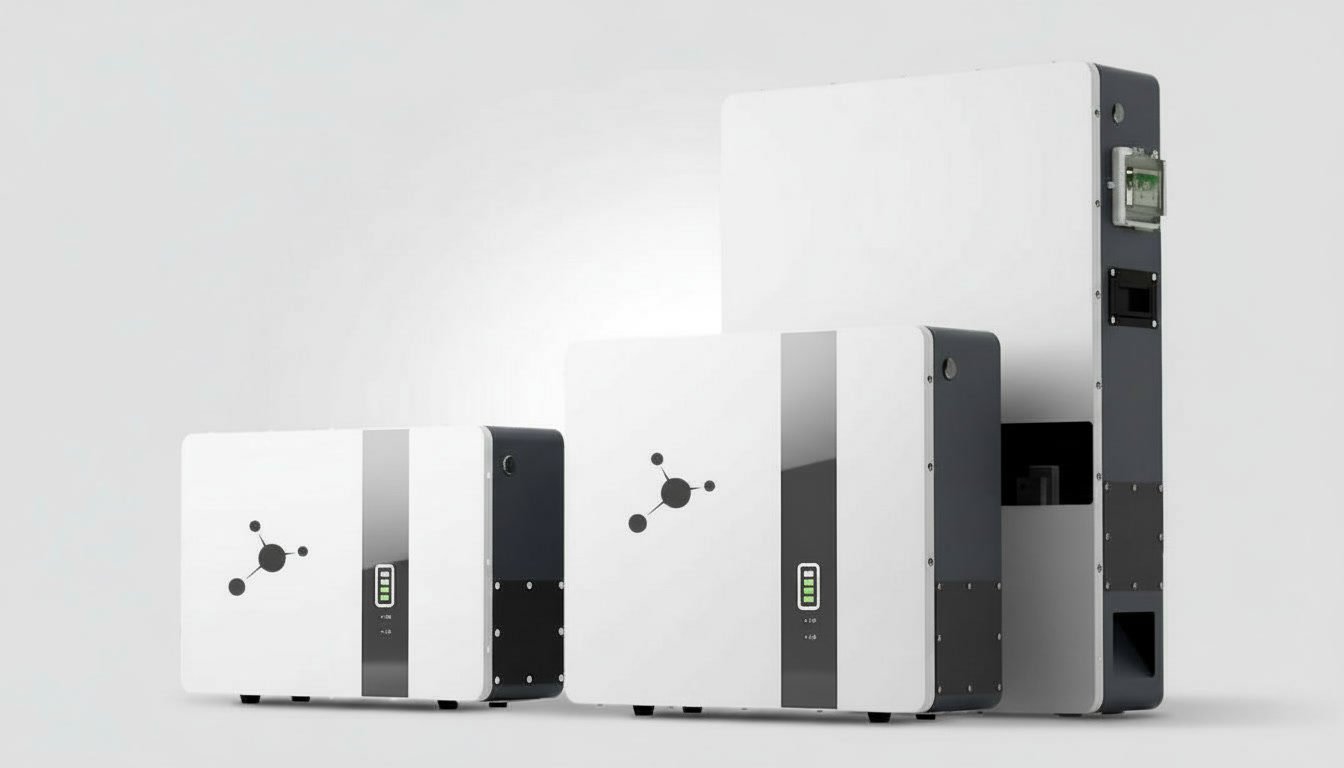
Storage is treated as core infrastructure across Glow One, Glow Plus and Glow Max
System architecture: modular vs closed design
Not all systems are designed to evolve.
Closed architectures lock components to specific manufacturers or configurations. If demand increases — through EVs, heat pumps, or home extensions — replacement may be required rather than expansion.
Modular systems allow battery capacity to be increased, inverters to be upgraded, and components to evolve independently.
Household energy demand almost always grows. Systems designed only for today become constraints tomorrow.
Glow systems are specified with expansion in mind. This costs more upfront in design, but avoids replacing functional equipment later.
Infrastructure should adapt to the home, not the other way around.
Grid connection is a two-way relationship
Homes with solar and storage remain grid-connected.
The grid supplies backup power and receives surplus generation. In the UK, systems up to 3.68 kW single-phase connect under G98. Larger systems require G99 approval.
In constrained areas, export limiting may apply, restricting how much electricity can be sent to the grid. Export remains possible through the Smart Export Guarantee (SEG), though export rates are typically lower than import costs.
This makes self-consumption more valuable than export — another reason batteries matter.
During grid outages, design determines behaviour
Standard systems shut down during grid outages to protect network engineers.
Backup-capable systems include additional equipment that allows the home to operate independently, supplying selected circuits from the battery and solar during daylight.
Backup must be designed in from the start. It cannot simply be enabled later without the correct hardware and wiring.
For most UK homes, backup is a consideration rather than a necessity — but in rural locations or homes with critical loads, it may matter more.
The system operates as a whole
A home energy system is not panels plus a battery plus an inverter.
It is an integrated system responding continuously to conditions.
The same equipment behaves differently in June than in December. Batteries fill early in summer and may never fully charge in winter. Export patterns reverse. Grid reliance shifts.
Design determines how gracefully the system handles these realities.
This is what separates infrastructure from equipment.
What to look for when evaluating systems
Some signals suggest whether a system is designed for long-term performance:
Pricing before site assessment
Quotes without a site visit are assumption-based.
Fixed packages
Packages prioritise speed over suitability.
Urgency framing
Infrastructure decisions should not feel rushed.
Vague specifications
You should know exactly what is being installed and why.
Optimistic savings claims
Capability matters more than projected payback.
No expansion path
Systems should grow with the household.
Unclear warranty accountability
Long-term systems require long-term responsibility.
No discussion of trade-offs
Honest design acknowledges compromise.
Market context: storage is now standard
The UK has around 1.6 million solar homes. In the South East, adoption is particularly high.
What has changed is storage. Battery installs have grown from 34 per month in 2022 to over 1,100 per month in 2024. In areas like Reigate and Banstead, over 94% of new solar installs include batteries.
Solar is no longer about export income. It is about control, resilience, and predictability.
Specification follows understanding
This article explains how home energy systems work. It does not prescribe system sizes or configurations.
What remains constant is the physics.
Systems designed around those fundamentals — where components are selected to work together — will continue performing as intended for decades.
That is the difference between buying products and installing infrastructure.