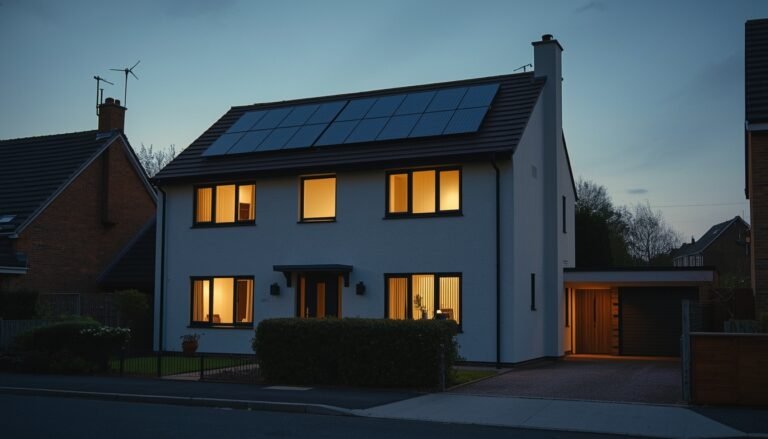

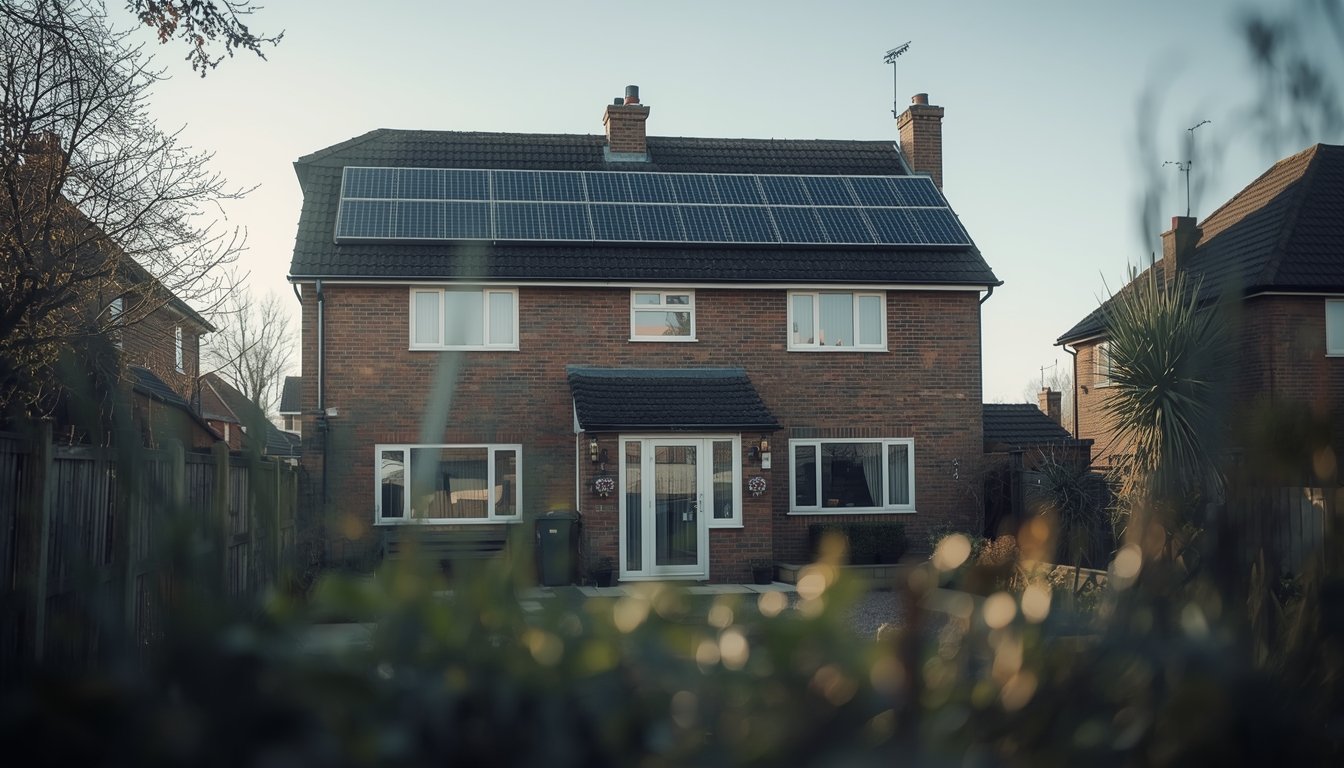

In January 2026, the government published its Warm Homes Plan — a £15 billion programme to upgrade up to five million homes by 2030. It is the largest public investment in home energy in British history.
Most of what you will read about it elsewhere will focus on grants for low-income households, heat pump targets, and fuel poverty. That coverage is important, but it does not tell the whole story. If you own your home, already pay your energy bills without difficulty, and are thinking seriously about solar, battery storage, or a broader energy system, the plan still matters. It just matters differently.
This is a plain reading of what has been confirmed, what is still uncertain, and what it means for homeowners considering long-term home energy infrastructure.
The shape of the plan
The £15 billion breaks down into three broad areas.
Low-income household grants (~£5 billion)
Fully funded upgrade packages — solar, batteries, insulation, and heat pumps — delivered through local authorities and housing associations. If your household income is above approximately £36,000 and you do not receive qualifying benefits, this funding is not available to you.
Boiler Upgrade Scheme (~£2.7 billion)
Provides £7,500 grants for heat pump installations. This grant is available to any homeowner in England or Wales replacing a fossil fuel heating system, regardless of income.
Government-backed consumer loans (~£2 billion)
A new scheme designed to offer low or zero-interest finance for solar panels, battery storage, heat pumps, and insulation. Intended to be available to all homeowners. It has not yet launched — the government expects it to begin around 2027, delivered through participating banks. The exact interest rates, loan limits, and eligibility criteria have not been finalised.
The remaining funding covers heat networks, devolved government allocations, and workforce training — important at a national level, but outside the scope of what most homeowners will encounter directly.
What is available to homeowners now
Two things are available today that apply regardless of income.
The £7,500 heat pump grant – Available through the Boiler Upgrade Scheme for air-source or ground-source heat pumps, with a smaller £2,500 grant for air-to-air heat pumps added in 2025. The scheme runs until at least 2029/30, and the requirement to hold a valid EPC before applying is being relaxed.
0% VAT on solar, batteries, and heat pumps – This has been in place since 2022, but it is due to revert to 5% on 31 March 2027. The Warm Homes Plan did not announce an extension. Whether it will be extended remains to be seen, but as things stand, the current rate has a defined end date.
The consumer loan scheme is not yet available. When it arrives, it will be worth understanding in detail — but it is not something a homeowner can act on today.
Solar and new-build homes
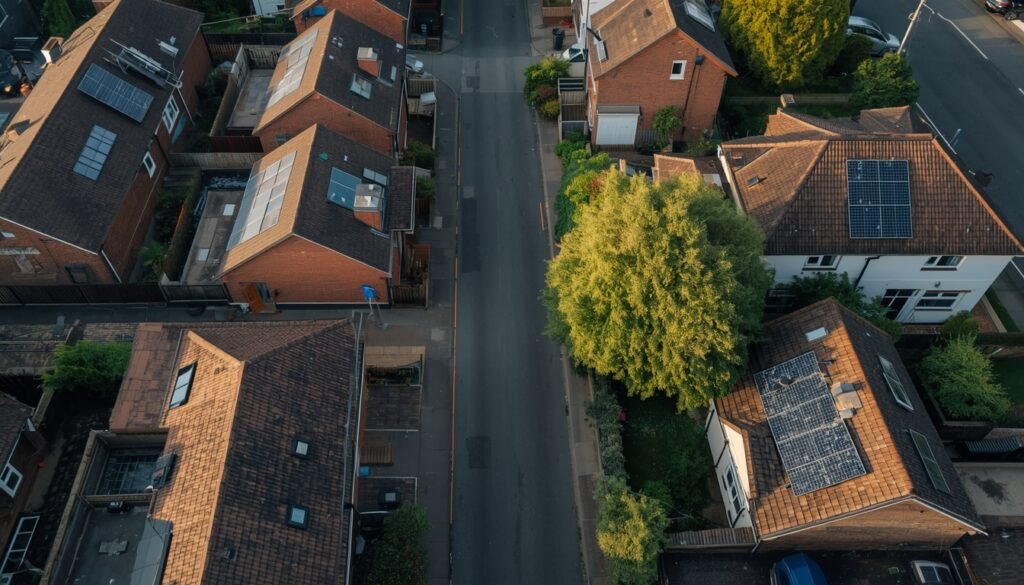
The plan commits to what the government calls a “rooftop revolution” — tripling the number of homes with solar panels by 2030, from roughly 1.6 million to around 4.6 million.
A significant part of this comes through the Future Homes Standard, which will require solar PV on virtually all new-build homes from late 2027. The technical specification models a standard setup of around 4 kW of solar panels and 4 kWh of battery storage per home — though battery storage itself is not mandated. Solar Energy UK and MCS both noted this omission. A home built to minimum compliance may have solar panels but no battery, which limits how much of the energy generated can actually be used by the household.
For existing homes, the solar target relies on a combination of:
- The consumer loan scheme (from ~2027)
- Low-income grant programmes
- Continued organic market growth
MCS data shows that 257,000 small-scale solar installations were completed in 2025 — up roughly a third on the previous year. Battery storage installations grew even faster. The market is already moving. The plan aims to accelerate it.
How EPCs are changing
The current EPC system rates properties on a single A-to-G scale based on modelled energy costs. It has been widely criticised for years. It penalises homes with heat pumps — because electricity costs more than gas per unit — and largely ignores solar panels and battery storage.
From October 2026, a new framework introduces four separate metrics:
- Energy cost — indicative running costs for occupiers
- Fabric performance — how well the building envelope retains heat
- Heating system performance — efficiency and environmental impact of the heating source
- Smart readiness — the home’s capacity to integrate solar, batteries, and intelligent controls
The underlying calculation methodology is also changing. The Home Energy Model replaces the Standard Assessment Procedure and calculates energy use in half-hour intervals rather than monthly averages. This means it can model the real-world performance of solar generation, battery cycling, and time-of-use tariffs far more accurately than the current system.
The practical implication: solar panels and battery storage will, for the first time, visibly improve a property’s EPC under the new framework. Under the current system, their impact on the headline rating is limited. Under the new system, they directly affect the smart readiness metric and, through self-consumption modelling, the energy cost metric as well.
Key EPC dates
- October 2026 — new four-metric EPC format introduced
- 2027 — new Home Energy Model statutory instrument in force
- October 2029 — new-format EPCs become compulsory for all assessments
Rented homes and what that signals
Privately rented homes in England and Wales must reach EPC Band C by October 2030, up from the current minimum of Band E. Landlords face a £10,000 cost cap per property and penalties of up to £30,000 for non-compliance.
This does not directly affect owner-occupiers. But it signals where the regulatory direction of travel is heading. An estimated 2.9 million rented homes will need upgrading. That creates sustained demand for solar, battery, and insulation installations across the wider market — which in turn supports the supply chain, installer capacity, and component availability that all homeowners depend on.
It also means that within a few years, a far higher proportion of the housing stock will have some form of energy system. What was once an early-adopter decision is becoming a baseline expectation.
What the plan does not address
It is worth being honest about what is missing.
The cost of electricity relative to gas. Electricity currently costs around four times as much as gas per unit. Heat pumps are three to four times more efficient, which broadly cancels out the price difference — but does not produce the significant bill savings many homeowners expect. Nesta, the Heat Pump Association, and Octopus Energy all identified this as the most significant gap in the plan.
For solar and battery systems, the economics work differently — self-consumption avoids buying electricity at full price, and battery storage allows households to shift usage to cheaper periods. But the elevated baseline electricity price is still the context within which those savings operate.
No gas boiler phase-out date. The previous government’s 2035 target has been effectively dropped. There is no mandate to replace an existing boiler. The approach is incentive-led rather than regulatory.
A gap in the supply chain. The current ECO scheme is ending without a like-for-like replacement until around 2027. For the retrofit industry, this creates real uncertainty — though for homeowners considering private installations, the direct impact is more limited.
What this means in practice
The Warm Homes Plan does not change the fundamental logic of home energy systems. Solar panels generate electricity from sunlight. Batteries store it for when it is most useful. Intelligent controls manage the flow. A well-designed system reduces reliance on the grid, provides resilience against price volatility, and — under the new EPC framework — will be formally recognised as adding measurable value to a home.
What the plan does is confirm that this is now the direction of national housing policy:
- Solar on every new-build home
- Rented homes required to meet higher energy standards
- EPCs reformed to reward smart energy systems
- Public investment at a scale that normalises the technology
For homeowners already thinking carefully about home energy, very little in this plan is surprising. The government is catching up with a conclusion that many households have already reached: that a properly designed energy system is long-term home infrastructure, not a short-term purchase.
The question was never whether this would happen. It was when, and how seriously.