


The biggest misunderstanding in residential solar
If you spend a few minutes browsing solar adverts online, you’ll quickly see the same message repeated again and again:
“Higher wattage panels = better system.”
It sounds logical. Bigger numbers must mean better performance.
But the reality is very different.
In most homes, panel wattage has far less impact on real-world performance than system design. Focusing on the wrong metric often leads to systems that look impressive on paper but perform poorly over time.
The truth is simple.
A well-designed system with standard panels will almost always outperform a poorly designed system using higher-wattage panels.
Understanding why requires stepping back and looking at how a modern home energy system actually works.
Solar panels are only one part of the system
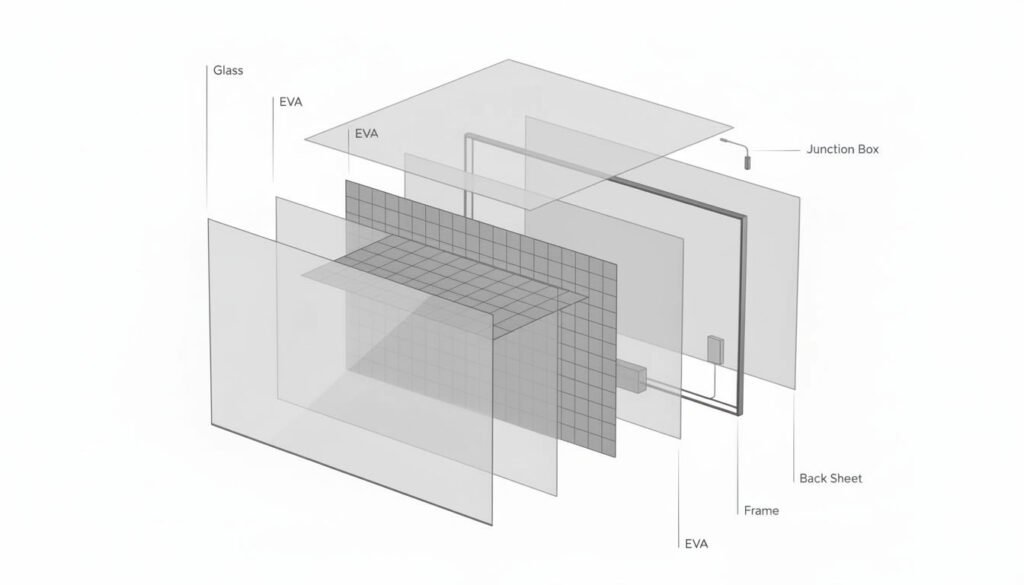
Solar panels generate electricity, but they are only one component in a much larger system.
A modern home energy system typically includes:
• Solar panels
• A hybrid inverter
• Battery storage
• Monitoring and control software
• Electrical protection and grid integration
• System architecture and configuration
Each part must work together.
Glow approaches home energy as complete infrastructure rather than individual components, because the reliability of the system depends on how those parts interact, not just the performance of a single device.
When these elements are balanced properly, the result is a system that performs consistently for decades.
When they are not, the entire system can suffer.
The “panel wattage” marketing trap
Panel wattage is often used as a headline figure because it is easy to understand.
But it’s also one of the least meaningful metrics when comparing systems.
Two systems with identical panels can produce dramatically different results depending on design decisions such as:
• Roof layout and orientation
• String configuration
• Shading behaviour
• Inverter sizing
• Battery integration
• Export limits and grid control
These factors can easily change system output by 10–30% or more, which is far more significant than the difference between panel models.
In other words, the biggest gains usually come from better engineering, not better panels.
How shading affects real-world performance
Imagine two identical homes using the same panels.
System A
• Panels connected in traditional strings
• Partial shading from a chimney or nearby tree
• One shaded panel reduces the performance of the entire string
System B
• Each panel equipped with a panel-level optimiser
• Panels operate independently
• Shading affects only the panel involved
The difference can be dramatic.
In traditional string systems, a single shaded panel can reduce the output of an entire group of panels. With panel-level optimisation, each panel performs independently, meaning localised shading has a much smaller impact.
For this reason, Glow systems include optimisers on every panel as standard. This allows the system to:
• maximise performance panel by panel
• reduce the impact of partial shading
• monitor the performance of each panel individually
• maintain long-term reliability if one panel underperforms
It’s a relatively small design decision that can have a significant impact on lifetime performance.
Why panel-level optimisation matters
Many residential systems still rely on traditional string designs where panels are electrically linked together.
While this approach works, it has a key weakness.
All panels in the string perform at the level of the weakest panel.
Real roofs rarely behave perfectly. Over time, panels may experience:
• partial shading
• dirt or leaf debris
• minor manufacturing variation
• gradual performance differences
Without optimisation, these small issues can affect the entire string.
Panel-level optimisers solve this by allowing each panel to operate independently, extracting the maximum available energy from every module rather than letting one panel limit the rest.
They also enable detailed monitoring.
If a single panel begins to underperform years later, the issue can be identified immediately rather than going unnoticed for long periods.
Why inverter sizing matters more than panel wattage
The inverter is often described as the brain of the system.
It manages:
• solar generation
• battery charging
• household consumption
• grid export
• safety and compliance
A poorly sized inverter can limit how much solar energy your home actually uses.
For example, if large panels are paired with an undersized inverter, the system may frequently clip generation, meaning excess solar power is lost.
Conversely, a well-balanced system ensures the inverter, panels and battery operate efficiently together.
In practice, inverter design often has more impact on real-world performance than panel choice.
Battery storage changes the equation
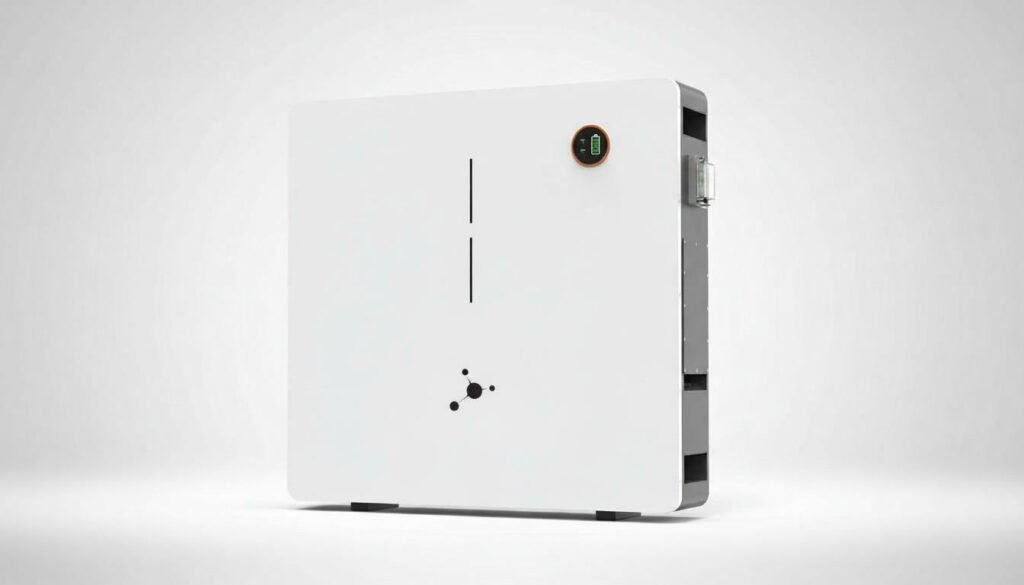
The solar market originally developed around generation-only systems.
Today, homes are becoming increasingly electrified — with EV charging, heat pumps and home offices all increasing electricity demand.
Battery storage is therefore becoming a core component of system design, not just an optional upgrade.
In fact, in Reigate & Banstead during 2025:
• 94% of residential solar installations included battery storage.
This shift changes how systems should be designed.
Instead of simply maximising solar output, the goal becomes:
• matching generation with household demand
• storing excess energy efficiently
• managing grid exports intelligently
That requires careful system architecture — not simply selecting the highest-wattage panels available.
Why future-proofing matters more than ever
When most people think about solar, they focus on reducing their current electricity bill.
But the bigger question is how a home will use energy over the next 10–20 years.
Across the UK, two major trends are already underway.
Energy demand inside homes is increasing.
Homes are gradually moving away from gas and toward electrified systems such as:
• electric vehicles
• heat pumps
• induction cooking
• home offices and digital infrastructure
Each of these increases a household’s reliance on electricity.
A home that currently uses 3,000–4,000 kWh per year could easily see that demand double as new technologies are introduced.
At the same time, energy prices are likely to remain volatile as the wider energy system evolves and infrastructure investment increases.
That means homeowners are increasingly looking for control and resilience, not just short-term savings.
Designing for the home you’ll live in tomorrow
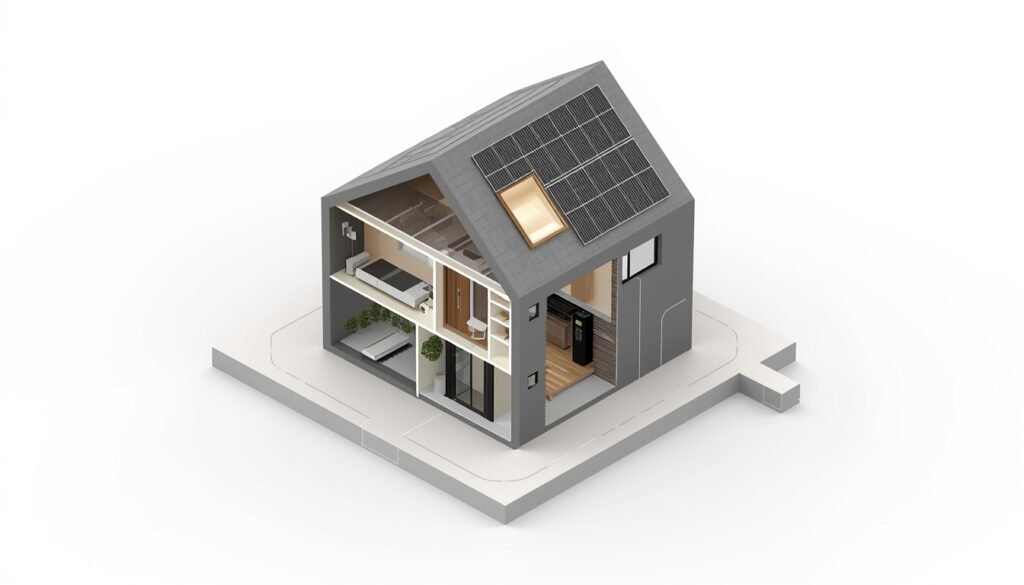
A solar system installed today will likely operate for 25–30 years or more.
During that time, most homes will undergo significant changes.
Households may add electric vehicles, move from gas to heat pumps, increase battery capacity or electrify more of their daily energy use.
A system designed only around today’s electricity usage can quickly become restrictive.
That’s why modern system design should consider:
• inverter capacity and headroom
• scalable battery storage
• electrical infrastructure readiness
• intelligent energy management
The goal is not simply to install solar panels.
It’s to create a system that can adapt as the home evolves.
“Most people are told to choose panels. In reality, the panel is one of the least important decisions. What really determines performance is how the entire system is designed to work together.”
— Paul Casey, COO, Glow Homes
Small design details that protect the system
Good system design is not only about electrical architecture. It also includes practical details that protect the installation over time.
One example is bird protection.
Solar panels naturally create sheltered spaces beneath them, which birds often use for nesting. Over time, this can cause:
• debris build-up
• blocked airflow around panels
• cable damage
• noise and maintenance issues
Many installers address this with simple wire mesh attached around the array. While inexpensive, mesh systems can degrade over time and often detract from the appearance of the roof.
A more durable solution is solar skirting, which forms a clean perimeter around the array.
Solar skirting provides several advantages:
• prevents birds accessing the space beneath panels
• improves airflow around the array
• creates a cleaner visual finish
• uses durable materials designed to last many years
Well-installed solar skirting can typically last 15–20 years, meaning the protection remains effective for the majority of the system’s life.
It’s another example of how small design choices can influence both long-term reliability and the finished appearance of the installation.
Why many systems are designed backwards
A surprising number of solar installations follow a simple formula.
- Choose a panel brand
- Maximise roof coverage
- Add an inverter
- Offer battery as an upgrade
This approach treats the system as a collection of products.
But modern homes require the opposite.
The design process should begin with:
• household energy usage
• future electrification plans
• grid constraints
• battery strategy
• system control and monitoring
Only then should panel layout be determined.
Panels should support the system — not define it.
The bigger picture: energy as infrastructure
The biggest shift happening in residential energy is conceptual.
Solar used to be treated as a home improvement product.
Today it is becoming home infrastructure.
As homes electrify and rely more on on-site generation and storage, the energy system becomes part of the building itself — much like plumbing or heating.
That means the design decisions made today will influence how a home operates for decades.
Which is why system architecture matters so much more than panel wattage.
The takeaway
When evaluating a solar installation, the most important questions are not:
• What panels are you using?
• How many watts are they?
The better questions are:
• How has the system been designed?
• How will it perform in real-world conditions?
• How does storage integrate with generation?
• How will it adapt as the home changes?
Because in the end:
A solar system is not a set of panels.
It’s a carefully balanced energy system designed to power a home reliably for decades.