

Why System Design Matters More Than Products
A well-designed home energy system using mid-range components will often outperform a poorly designed system using premium products.
That’s not a hot take — it’s the core truth that separates reliable, high-performing installs from expensive disappointments. The difference between a system that delivers around 85–90% of its theoretical output and one that achieves 70–75% typically comes down to how everything is specified and configured together, not which logo is on the box.
If you’re new to Glow, this is basically our whole personality.
We design first, then deliver properly.
We don’t do off-the-shelf packages. Ever.
If you want to go deeper while you’re here:
- See the bigger picture on How Glow Works
- Explore our tiered approach to Our Systems
- Understand how we deliver at scale with Glow Networks
The hidden performance killer: “fine products, flawed design”
Research from the University of York, analysing 3.3 million solar modules installed across the UK, found that 36.5% exhibited thermal defects. Crucially, these weren’t necessarily manufacturing faults in the panels themselves — they were often the consequence of design and installation decisions, such as poor shading assessment, incorrect string configuration, or inadequate ventilation.
In plain English: your panels can be great, and your results can still be… not great.
This is exactly why Glow focuses on system design as the foundation, not product picking as the headline.
What “system design” actually means (in real life)
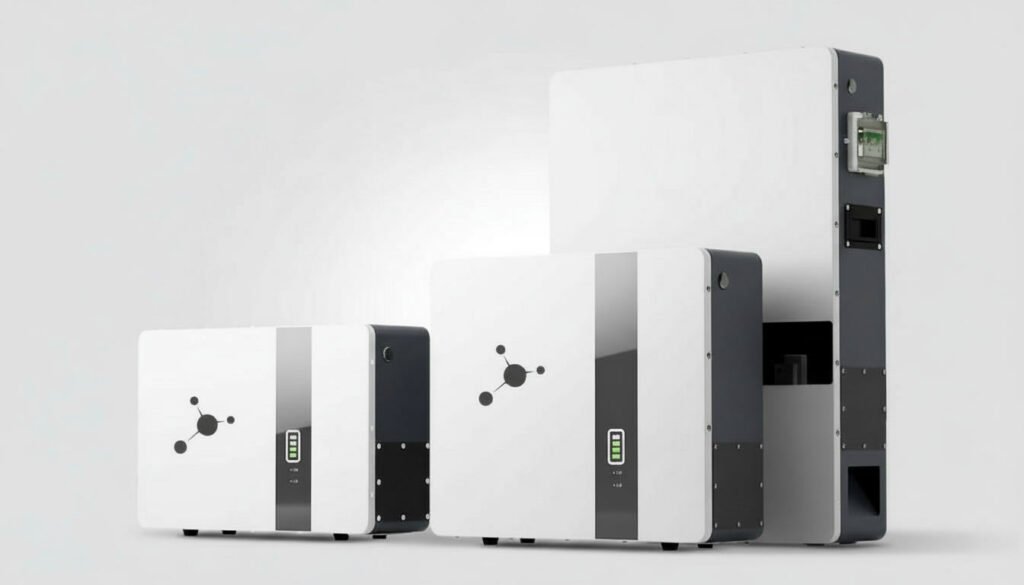
System design is the discipline of matching components to each other and to the specific home where they’ll operate.
It starts with how a household actually uses energy:
- When demand peaks
- How usage varies across the day
- What future changes are likely — EVs, heat pumps, home working, lifestyle shifts
A household where two adults commute will often generate surplus solar in the daytime, then spike usage in the evening. A work-from-home household tends to consume more steadily throughout the day. Those patterns should influence panel orientation, battery sizing, and inverter selection — but many quotes treat homes identically and work from roof size plus annual usage alone.
That’s like buying shoes based on your height. Technically related. Emotionally devastating.
The Glow version of this principle is simple:
You don’t choose a system. We design the right one.
Load profiling: when you use energy, it matters as much as how much
Load profiling looks at timing, not just totals.
A home using 12 kWh per day might use 70% of it between 6 pm and 10 pm. If you size a battery using a generic rule like “half a day’s usage,” you can easily miss the point — because the battery may not capture enough midday surplus to cover a concentrated evening peak.
This is why design sits at the heart of how Glow works, and why storage is considered from day one across all of our system tiers.
Inverter sizing: efficiency lives in the real world, not the brochure
Inverter sizing is about balance — between panel capacity (DC), inverter rating (AC), and real household demand.
A key concept here is the DC/AC ratio, which for UK installs typically falls between 1.15 and 1.30. Panels rarely produce their full nameplate rating under real conditions. For example, a 400W panel in British weather may more commonly deliver around 260W.
This is why slightly undersizing the inverter relative to total panel capacity can be smart — it allows the inverter to operate efficiently for more hours of the day. Oversizing often leads to inefficiency, with inverters running at 40% capacity when they’re happiest closer to 80–90%.
This kind of optimisation is baked into how our systems are specified — whether that’s Glow Plus for higher-use homes or Glow Max for fully electrified households.
String configuration: small wiring decisions, big performance impact
String configuration determines how panels are wired together.
The key rule is simple: panels in the same string should share the same orientation, tilt, and shading conditions. If they don’t, the weakest panel drags the whole string down.
This is one of those invisible design choices that homeowners rarely see — but it has a real impact on output, reliability, and long-term performance. When it’s done badly, the system underperforms, and the panels unfairly take the blame.
This is also why delivery discipline matters just as much as design, and why Glow Networks exist to protect standards at scale.
The Glow take: design isn’t a step — it is the system
Most disappointing home energy installs aren’t disappointing because the homeowner chose bad products.
They’re disappointing because:
- The system wasn’t designed around real household behaviour
- Components weren’t properly matched
- Site constraints like shading, ventilation, and orientation weren’t treated as first-class inputs
Glow exists to do this properly — systems designed once, properly, then delivered with care and accountability.
A quick checklist to ask any installer (including us)
When reviewing a design or quote, it’s worth asking:
- How did you model when we use energy, not just annual usage?
- What DC/AC ratio are you targeting, and why?
- How are shading and string grouping being handled?
- What assumptions are you making about real-world panel output in UK conditions?
- How will this system evolve if we add an EV, a heat pump, or change how we use the home?
If the answers are vague, the performance usually is too.
Next steps
If you want a system that performs like it should — quietly, reliably, and without drama — the next step is simple.
Start with How Glow Works, explore Our Systems, see how delivery is coordinated through Glow Networks, or jump straight in and check your postcode to see if Glow is available in your area.