

There’s a moment most homeowners recognise.
You’re standing in the middle of your kitchen, looking at worktops, cabinets, finishes… making decisions that will shape how your home feels for the next 10–15 years.
And without too much hesitation, you commit.
£10,000.
£12,000.
£15,000.
It feels normal. Expected, even.
Because it’s your home.
The Way We Naturally Think About Our Homes
We invest in what we can see.
- A new kitchen
- A bathroom renovation
- An extension
- Doors that open the house into the garden
These decisions improve how a home feels.
They’re visible. Tangible. Immediate.
And they matter — deeply.
But there’s something quietly missing from that picture.
What We Rarely Think About
Very few homes are designed around how they actually run.
- How energy flows through the home
- When electricity is used — and when it’s stored
- What happens as demand increases over time
- How the home adapts to EVs, heat pumps, and changing lifestyles
Energy, for most people, still sits in the background.
A bill. A supplier. Something to pay — not something to design.
A Shift That’s Already Happening
Over the past few years, that assumption has started to change.
Household energy costs in the UK have risen dramatically — in some cases by more than 80% in a short period. What was once predictable is now anything but.
At the same time, the way we use our homes is evolving.
With over a million electric vehicles now on UK roads, and a clear national move toward electrified heating, the demand placed on homes is only increasing.
Energy is no longer a background utility.
It’s becoming something the home depends on.
Visible vs Invisible Investment
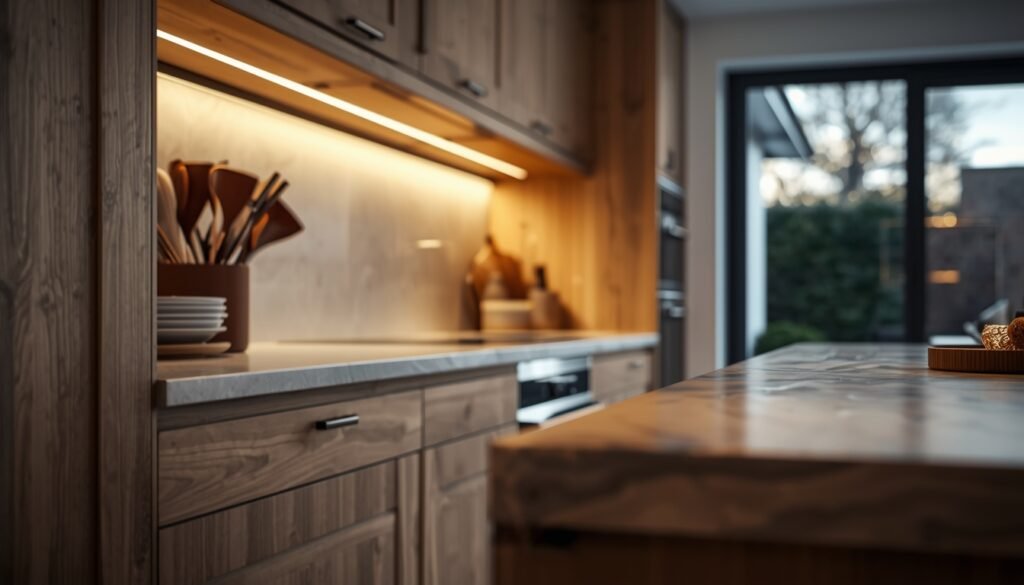
A kitchen changes how your home looks and feels.
A well-designed energy system changes how your home works.
One is immediate.
The other is continuous.
One is visible every day.
The other is felt every day — just without needing attention.
And that’s where the shift happens.
The Expectation Has Already Changed
In many parts of the UK, battery storage is no longer seen as an upgrade.
In some residential programmes, over 90% of new solar installations now include storage as standard.
Not because it’s a feature.
Because it’s becoming essential to how a home manages energy properly.
The expectation has already moved forward — most homes just haven’t caught up yet.
Designed Once. Built to Evolve
Homes are entering a different phase.
- More electricity demand
- More reliance on on-site energy
- More complexity in how energy is used and valued
Which means energy systems can’t be treated as add-ons.
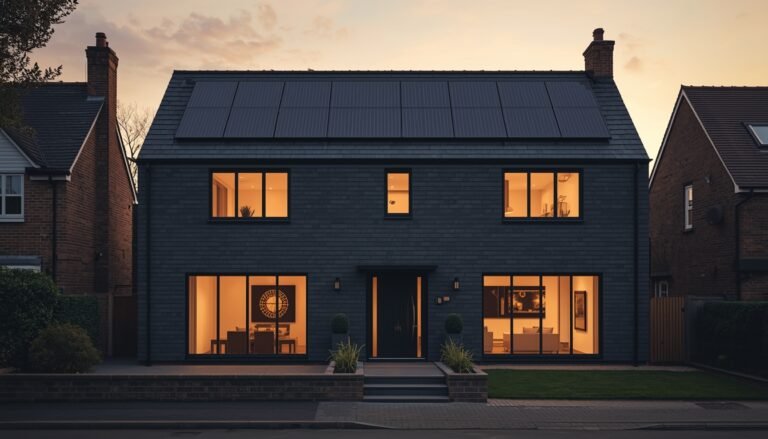
They need to be designed as part of the home itself.
At Glow Homes, that’s how we approach it.
Not as a collection of components, but as a complete system:
- Designed around the home, not the products
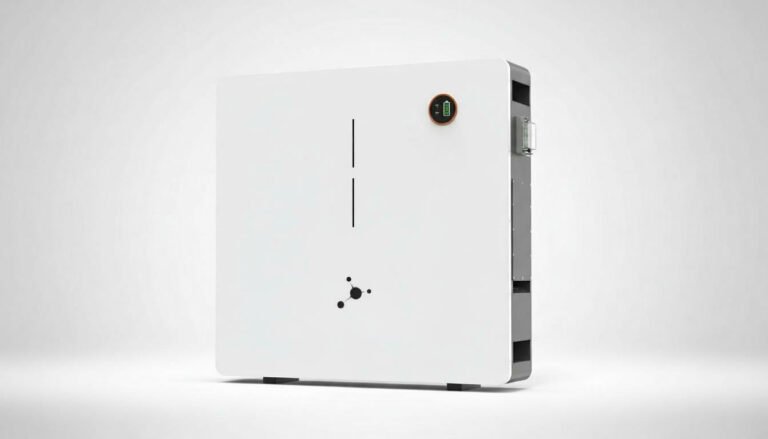
- Built with storage at the core
- Structured to adapt as the home evolves
- Supported long after installation
Because the goal isn’t to add something to the house.
It’s to make the house work better.
Quietly. Reliably. Long-term.
A Thought From the Design Side
As Lee Hamblin puts it:
“Most people invest in their home based on what they can see.
But the real performance of a home comes from what you can’t.
If the infrastructure isn’t right, everything else is just surface.”
A Simple Shift in Perspective
This isn’t about choosing one over the other.
Kitchens matter. Design matters. How a home feels matters.
But there’s a quiet question sitting alongside that:
If we’re willing to invest in how a home looks…
shouldn’t we also think about how it works?
The Homes That Will Age Best
The homes that perform best over the next 10–20 years won’t just be the ones that look good.
They’ll be the ones that were designed to handle:
- changing energy demand
- evolving technology
- long-term ownership
Without needing to be rethought every few years.
Final Thought
Most upgrades are visible.
The important ones often aren’t.
The shift isn’t about spending more.
It’s about thinking differently.
From upgrades…
to infrastructure.
If you’re starting to think about your home in that way, it’s worth understanding how it all fits together first. Simply get in touch and start a conversation.